In foodborne illness litigation, proving causation is notoriously difficult. A plaintiff may know they got sick after eating at a specific restaurant, but legally connecting that illness to a specific breach of duty requires more than a medical diagnosis—it requires a forensic breakdown of the restaurant’s chain of custody and safety protocols.
As a food safety expert witness, I help attorneys determine whether a restaurant followed the rigorous standards required to prevent contamination, or if operational negligence played a role.
Here is how we analyze liability in food poisoning and contamination cases.
1. HACCP: The Industry Standard of Care
The cornerstone of any food safety defense (or plaintiff attack) is HACCP (Hazard Analysis Critical Control Points). This is the internationally recognized system for reducing the risk of safety hazards in food.
- The Litmus Test: Did the restaurant have an active HACCP plan?
- The Breach: If a restaurant serving high-risk foods (like sushi or steak tartare) cannot produce a verified HACCP plan, they may have failed the fundamental standard of care for the industry.
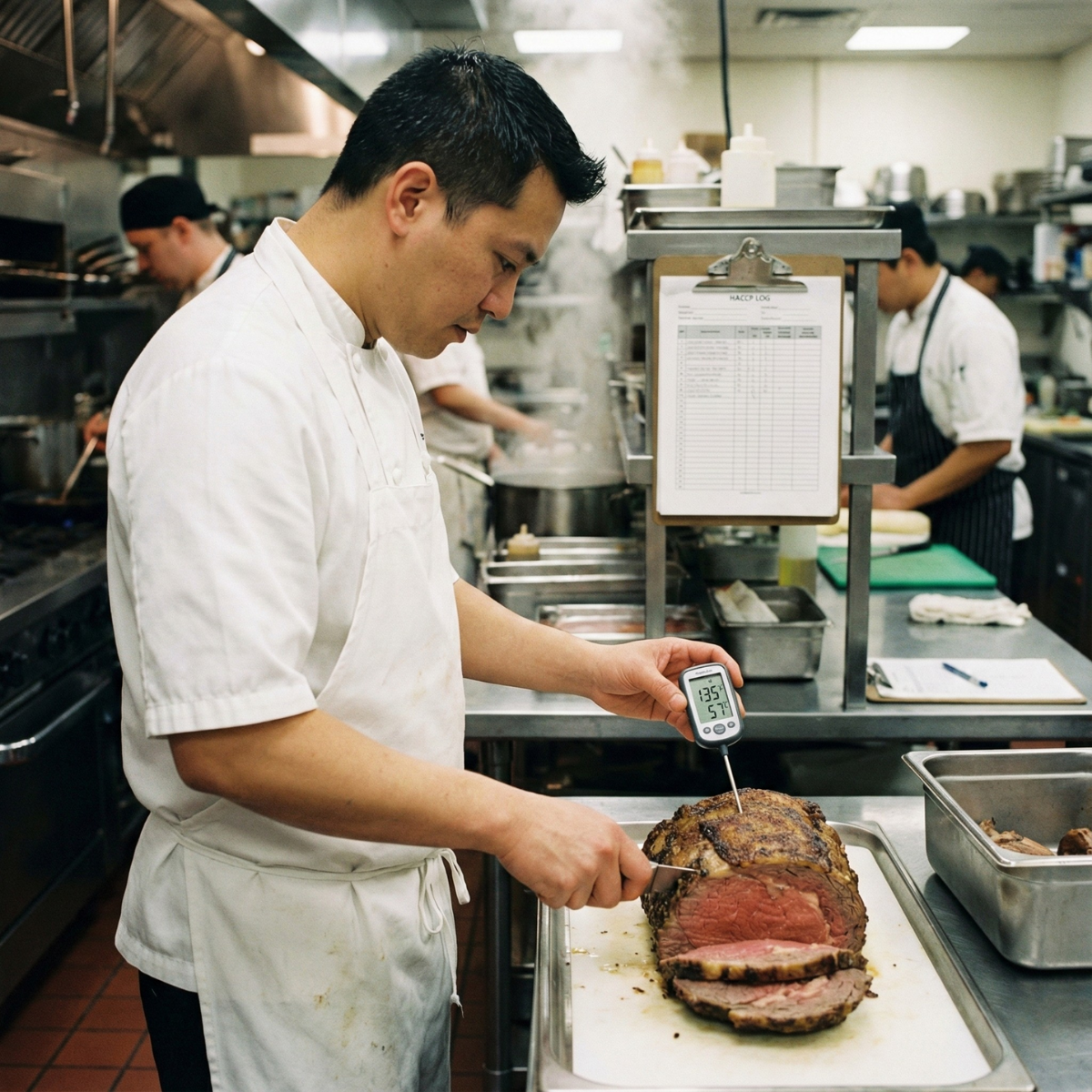
2. Temperature Logs: The “Smoking Gun”
Bacteria grow rapidly in the “Danger Zone” (41°F – 135°F). Restaurants are required to document cooling and holding temperatures.
- Missing Logs: A lack of temperature logs is often treated as a presumption of negligence.
- “Dry Lab” Logs: I frequently identify logs that were filled out fake—where every temperature is recorded as exactly “40°F” or “165°F” at the exact same time every day. This indicates “pencil whipping” rather than actual safety checks.
3. Cross-Contamination & Allergen Protocols
Many lawsuits involve not pathogens, but allergens. If a customer declares a nut allergy, the restaurant assumes a specific duty of care. I examine kitchen workflows to see if the “allergen-free” meal was prepared on the same cutting board as the allergen, or if the fryer oil was shared. A failure to segregate preparation areas is a clear operational failure.
4. Supply Chain vs. Restaurant Negligence
Sometimes, the restaurant did everything right, and the contamination came from the supplier (e.g., an E. coli outbreak in romaine lettuce). An expert witness can help defense attorneys prove that the contamination occurred upstream, shifting liability away from the restaurant operator, provided they followed all recall procedures.
Key Takeaway: Food safety cases are won on documentation. The presence (or absence) of accurate logs, training records, and health department reports tells the true story of liability.